The Esper Machine
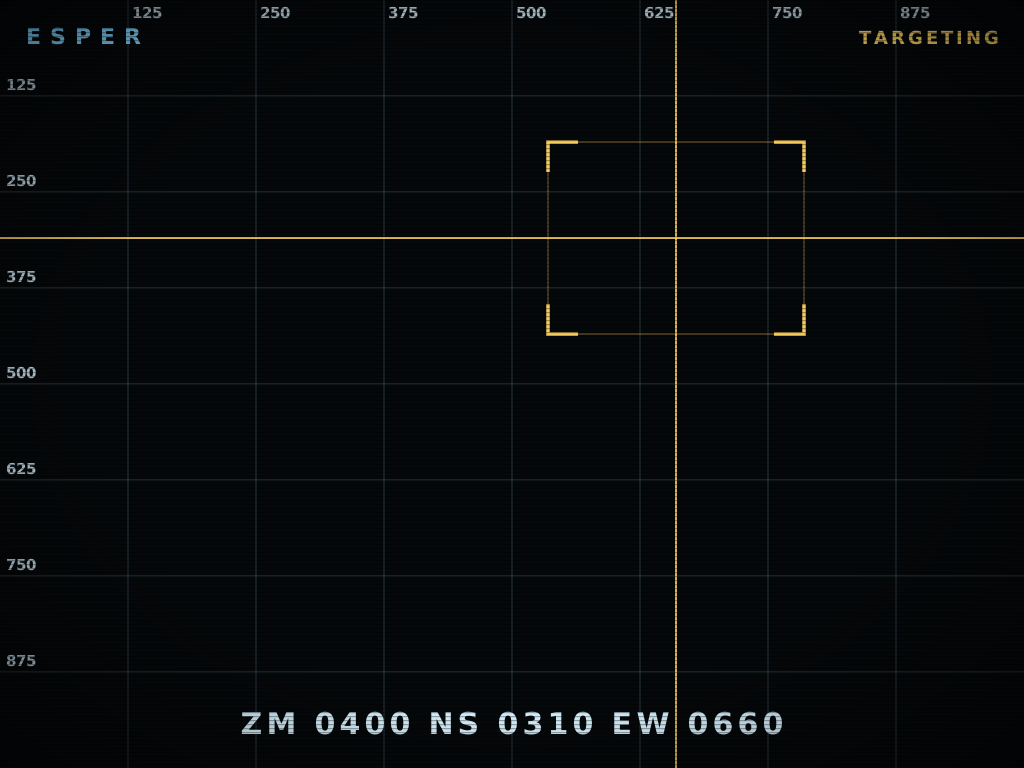
A working recreation of the photo-analysis machine from Blade Runner (1982) — and it runs in your browser. Load a photograph, then drive it with your voice: say “enhance 224 to 176” and the machine sweeps its crosshair to the coordinates, locks on with a blinking target window, and executes a stepped, servo-clunking zoom. Say “give me a hard copy right there” and it prints the evidence.
Best on desktop Chrome or Edge with a microphone — the machine listens. No mic? Every command can also be typed (press /) or driven from the keyboard.
How It Works
Technical Breakdown
The Esper never glides — that's the whole trick. Camera motion is quantized to ten steps per second, every enhance runs the film's three-act lock-on (crosshair sweep, target window, zoom), and each step is paired with a tick, whir, or clunk synthesized live in the browser. Speech recognition feeds a fuzzy command grammar that tolerates how people actually talk: number words, either word order, chained commands like “wait a minute, go right.” Everything on the screen — grid, coordinate readout, lock-on graphics — is drawn to a canvas under CSS scanlines, vignette, and flicker. No film assets anywhere: all sound is Web Audio synthesis and all imagery is yours.
Voice Grammar
Enhance to coordinates, track and pan by exact distances, absolute zoom levels, stop, reset, hard copy — spoken naturally, digits or number words, with chained commands executed in sequence.
Lock-On Choreography
A full-screen amber crosshair sweeps to your coordinates, a corner-bracket window blinks around the target region, then the stepped zoom executes — exactly the film's sequence.
Synthesized Sound
Servo ticks, whirs, clunks, acknowledge bleeps, and the idle hum — all generated live with the Web Audio API. No samples, nothing licensed.
Hard Copy
“Give me a hard copy right there” captures the current view as a white-bordered print with coordinates and timestamp — downloaded as a PNG.
The Physical Build Is Next
This is phase one. The full prop — angular console, CRT display, thermal-printed hard copies — is in the works. Join the newsletter to follow the build.